

Cornell Fume Hood Dashboard
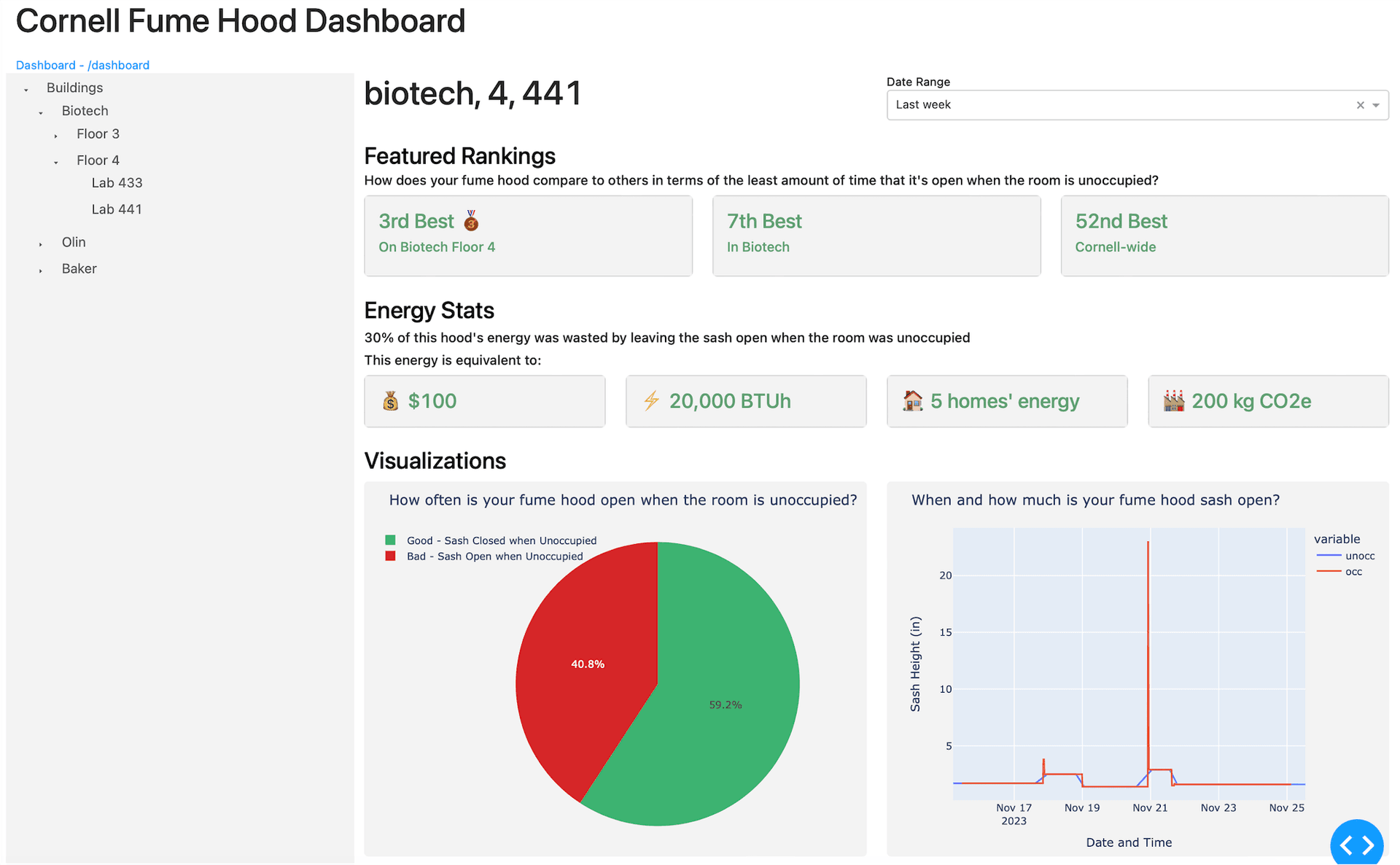
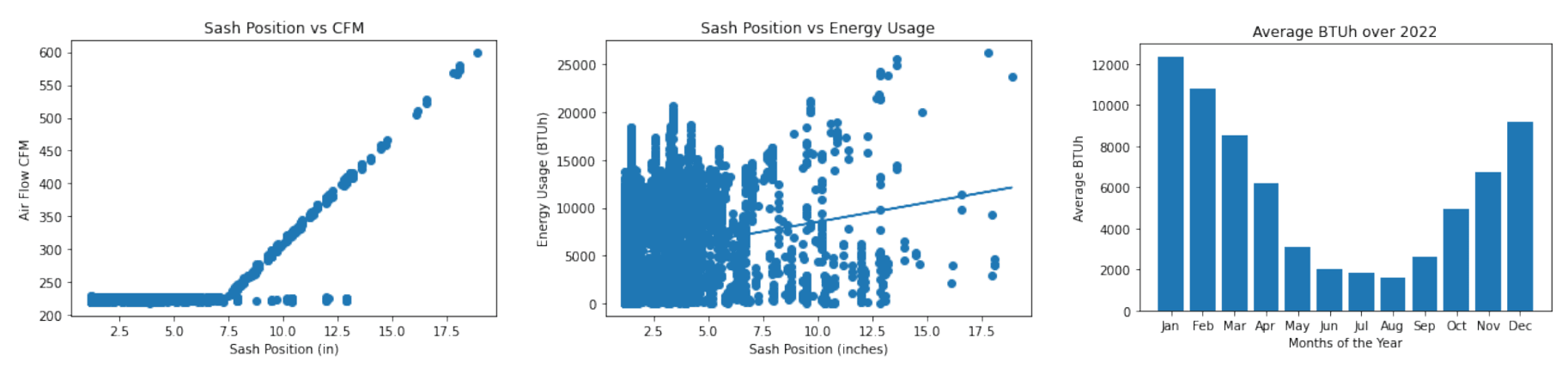
First, some background - fume hoods, found in most laboratories, are one of the most energy-wasting devices on campus (not because they consume lots of energy, but rather because they continuously vent heated/air-conditioned air out of the building, requiring new unconditioned air to replace it). While fume hoods are necessary to be opened during experiments, many people forget to close them after they are done, contributing to wasted energy.
The objective of the fume hood dashboard is to inform lab managers, lab members, and the general public of fume hoods that have been left open for an extended period of time, especially in unoccupied lab spaces. To do this, we query the WebCTRL API (WebCTRL is Cornell's building controls system) to gather fume hood sash position, airflow, and room occupancy data from 1,500+ fume hoods across campus.
By querying trend history of these data, we have done some calculations into how much energy was wasted from fume hoods over the past year, and how much could have been saved had the sash been closed during unoccupied periods, and the results are significant.
We are currently developing the dynamic dashboard using Plotly Dash (essentially you write code in Python for querying/processing the data and you can display it in nice Plotly graphs, along with standard HTML elements). I have never developed a dashboard quite like this and it certainly is challenging! Additionally, we are working on designing and implementing a DynamoDB database to store information about buildings, labs, and fume hoods that is necessary for the dashboard.
One thing you may be thinking is, "well, Reid, you could build an amazing dashboard, but if no one will use it, then you did not solve the problem!" And you are completely correct. To supplement the dashboard, we are planning to run inter-lab competitions with a prize given to the labs which use the least energy. We are also planning to develop signage to place next to fume hoods and send automated emails to labs which are using the most energy.